
Is Jiu-Jitsu Safe for a 5-Year-Old? What to Ask Before You Enroll
Joao Crus explains what parents should ask before enrolling a five year old in Jiu Jitsu, from supervision and contact to emotional safety.
By Joao Crus ·
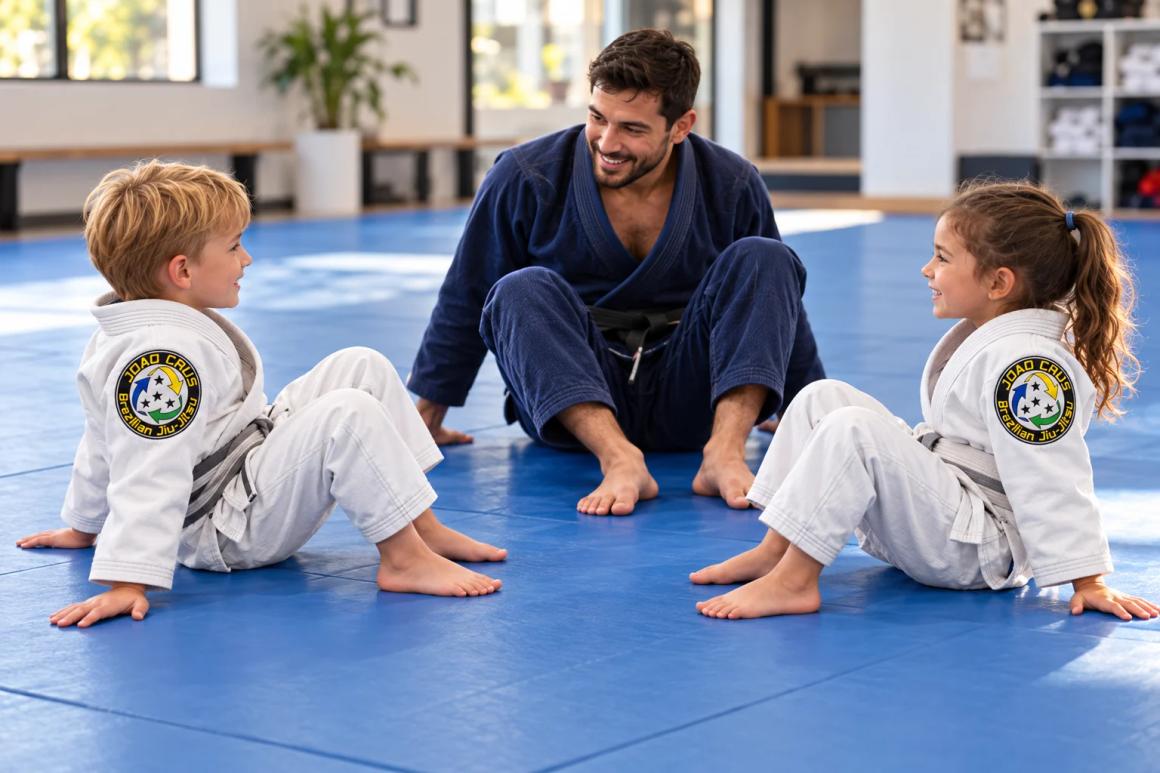
Relational First, Physical Second.
You want your child to become more confident. You want them to make friends, move their body, and learn how to handle frustration. But then you see a video of Jiu Jitsu and wonder, “Is my child too young for this?”
It is a fair question. I would want you to ask it.
After 23 years of teaching children, I believe the most useful question is this: What will my child actually be doing in this class, and who will be guiding them?
A class for a five year old should be built around how young children learn. The instructor, the activities, and the expectations all matter.
Start with an honest conversation about safety
Jiu Jitsu involves physical contact. Falls, collisions, and injuries are possible. A good instructor should be comfortable discussing those risks and explaining the steps they take to reduce them.
The American Academy of Pediatrics recommends that children begin martial arts with skills that do not involve contact, with contact training introduced only when they have developed the necessary skills and readiness. That is a useful starting point for your conversation with any academy.
Here are the questions I would ask before enrolling.
1. What does a beginner’s first class look like?
Ask the coach to walk you through it. Will your child practice balance, coordination, and simple movements? How are instructions explained? What happens when a child does not understand?
At this age, I want to give a short instruction, show the movement, and let the child try. Then we practice again. Repetition gives children time to become familiar with something that felt difficult the first time.
2. What physical contact will my child be doing?
Ask directly about partner drills, takedowns, sparring, chokes, and joint locks. Which activities are included for this age? Which are excluded? How does the coach decide a child is ready to progress?
“We teach kids Jiu Jitsu” is not enough information. You should understand what your child will be asked to do and how the instructor controls the intensity.
3. Who is watching when children practice together?
Ask how partners are chosen and how many children each instructor supervises. Size matters, but so do experience, attention, and the ability to control movement.
Watch whether the coach notices when a child becomes too rough, looks confused, or needs help. Ask what the children are taught to do when someone says “stop” or taps. Every stop signal needs an immediate response.
4. What happens when my child gets scared or walks away?
This question tells you a lot about the person teaching the class.
A five year old may need to watch before participating. They may enjoy one activity and hesitate at the next. I do not see that as a reason to embarrass them.
I want to understand what is happening, help them settle, and offer a manageable way to try again. Sometimes that means making the activity simpler. Sometimes it means giving them a moment.
At our academy, I call this Relational First, Physical Second. The relationship is part of the teaching. I want children to know they can tell me when something hurts, when they are worried, or when they need help.
5. Can I watch, and how will you communicate with me?
Ask to observe a class and learn the academy’s parent observation policy. Ask about instructor screening, appropriate physical contact, and how a concern or injury is reported.
You should know who to speak with and what happens next if you raise a concern. A parent asking questions is helping the coach understand and care for their child.
6. How do you care for the training space?
Look at the mats and the space around them. Ask how often the mats are cleaned, what the illness policy is, and how the staff handles an injury. Ask who has current first aid and CPR training.
If your child has a medical condition, an injury, or a concern that could affect participation, discuss the activities with their pediatrician before starting.
Watch how your child is treated
When you visit, pay attention to the small moments. Does the coach learn your child’s name? Do they notice hesitation? Can they correct behavior without humiliating anyone?
In my classes, I want children to practice listening, taking turns, respecting boundaries, and recovering when something does not go their way. Learning the movement matters. So does learning that they can ask for help and try again.
Your child does not need to arrive confident. I want them to feel welcome while we begin building that confidence together.
Further reading: Martial Arts for Kids: A Parent’s Guide, American Academy of Pediatrics.
Come meet us and try a class
If you are looking for children’s Jiu Jitsu in Dripping Springs, I invite you to bring your child to Joao Crus Brazilian Jiu Jitsu. Meet us, ask your questions, and see how your child responds to the class.
The first class is on us.
Tell us your child’s age, and we will help you choose the right class.
Request your child’s free first class
Or call or text 512 644 4560.